|
Monday 27th
October to Sunday 2nd November 2025 |
| |
|
This coming week, we have a period of
occultations. Sounds like some series of sinister black magic rituals, but
in astronomy terms, an occultation occurs when one celestial body hides
another. |
| |
|
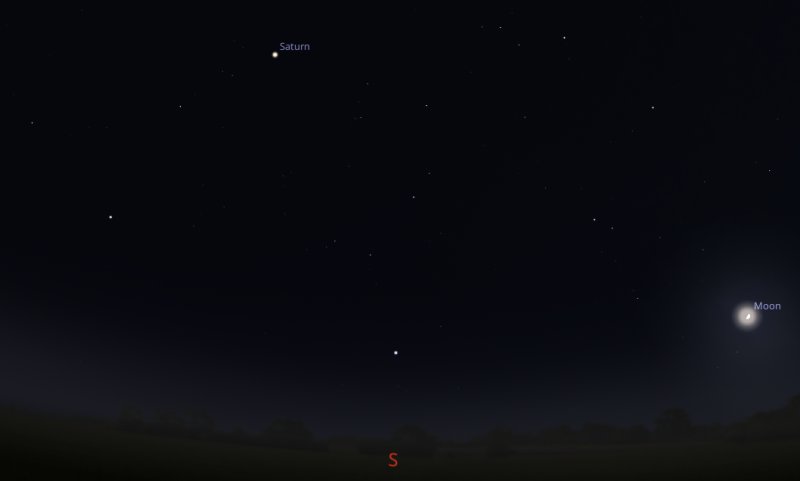
On the evening of Wednesday 29th, our target
is Saturn. Aim your telescope towards the gas giant a bit before 8.30pm,
when it will be located towards the south. |
| |
 |
| |
|
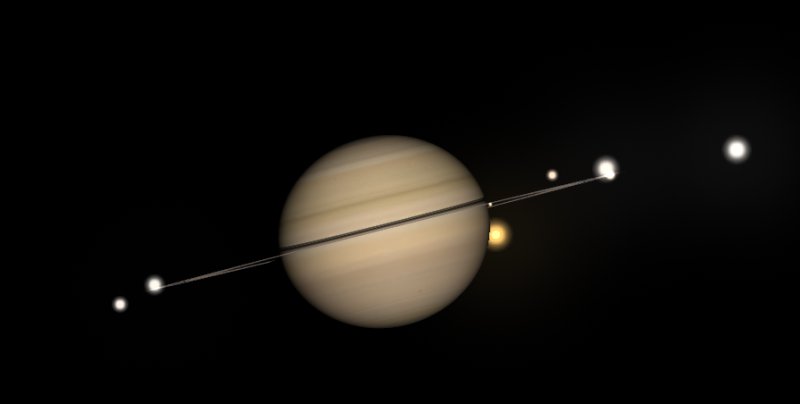
Although Saturn's dust rings are not
currently well-placed for observing, a number of its many moons will be
obvious. Keep watching and you should be able to see the largest of
Saturn's Moons, Titan, being gradually occulted by the planet. |
| |
 |
| |
|
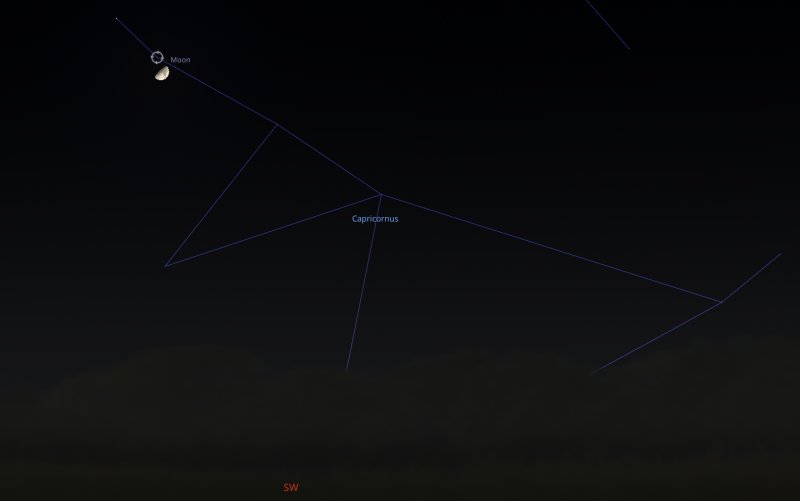
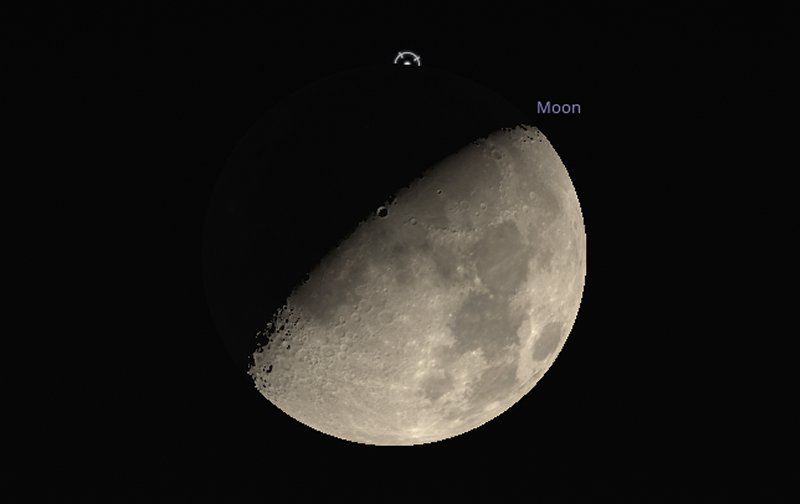
The following evening, Thursday 30th, look
towards the south west at 10pm to see a 62%-lit waxing gibbous Moon against
the backdrop of the constellation Capricorn. The Moon will be getting close
to the magnitude +3.7 star Nashira in the constellation. Just before
10.30pm, the Moon occults Nashira. |
| |
 |
| |
 |
| |
|
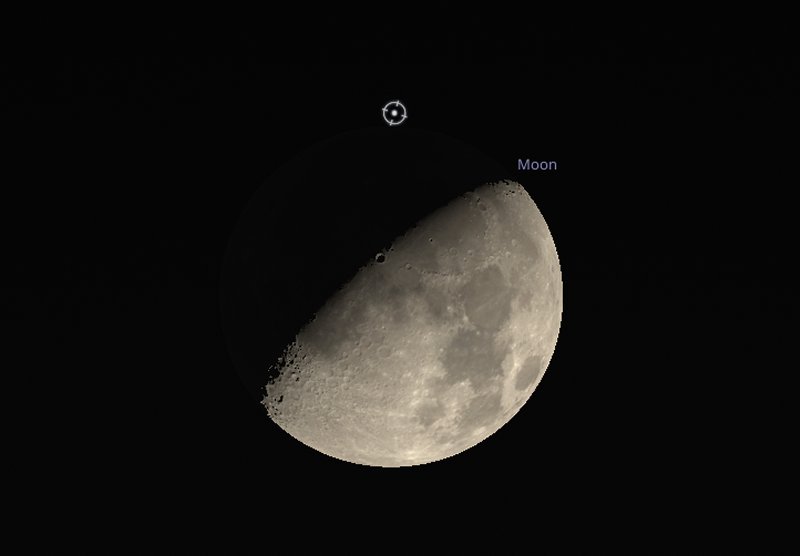
Remember that the Moon appears as a disc, but
being in a gibbous phase, you can only see 62% of the surface facing us lit
by sunlight. This means that Nashira will disappear before the illuminated
part of the Moon gets to it and at the beginning, it is occulted by the dark
bit of the Moon's surface that you can't actually see! |
| |
 |
| |
|
You won't get this effect with the Titan
occultation because planets that are further away from Sun than us don't
exhibit phases and we always see them as single points of light. |
|
Monday 20th to Sunday
26th October 2025 |
| |
|
Tuesday 21st is the peak of the annual
Orionids meteor shower, so named because the radiant point where the
shooting stars appear to originate from is close to the constellation of
Orion. |
| |
|
If you go outside from around 11pm. Orion
will have risen above the horizon to the east and the radiant point of the
shower will be a little to the left of the red giant star Betelgeuse. While
you are waiting for those streaks of light to appear, further to the left,
Jupiter will be easy to spot. |
| |
 |
| |
|
As a bonus, that evening coincides with a New
Moon, when the side of the Moon facing us is not illuminated at all by
sunlight, so there will be no light pollution from our celestial neighbour
to spoil the view. |
| |
|
Meteor showers are caused by the Earth
scooping up the debris left by comets while they travel close to the Sun on
their long journey from the outer reaches of our Solar System. As we orbit
around the Sun, these showers occur at the same time every year. In the
case of the Orionids, they are caused by bits left behind from comet Halley. |
| |
|
The shower has a zenithal hourly rate in
excess of 20 meteors per hour, so you shouldn't be waiting too long before
you see something and if you can't make Tuesday 21st, observing a couple of
days before or after the peak should still produce some results. |
| |
|
Finally, an early reminder that the first of
my astronomy talks and star parties for this season will be taking place at
the Ham Hill Visitor Centre on the evening of Friday 28th November. There
will be a one-hour talk about the night sky at 7pm and then if it is clear,
we venture outside. Places always fill quickly, so booking is essential via
the Ham Hill Rangers Office on 01935 823617. |
|
Monday 6th to Sunday
12th October 2025 |
| |
|
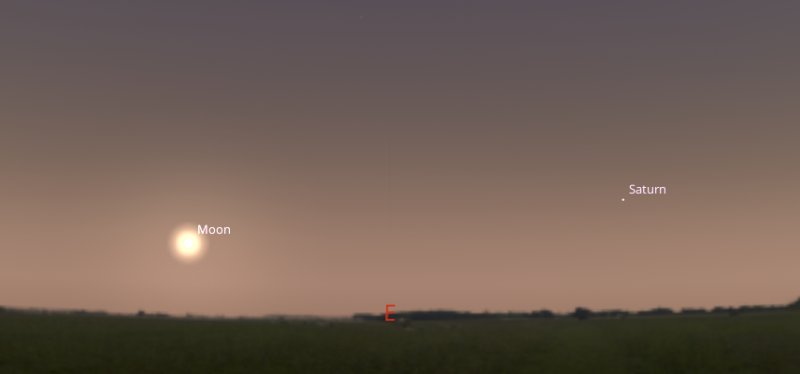
If you pop outside just as it's getting dark
on the evening of Tuesday 7th, say around 7pm and look towards the east, a
Full Moon will be rising above the horizon, with Saturn visible a little to
the right of it. |
| |
 |
| |
|
A Full Moon reflects so much sunlight that it
creates the ultimate natural light pollution and this will spoil your view
of Saturn a bit. It is also the worst possible time to go hunting for faint
deep sky targets. |
| |
|
We have just passed the autumn equinox and as
this Full Moon is the closest to that date, it is known as the 2025 Harvest
Moon. Coincidentally, this particular Full Moon occurs at perigee, when our
celestial neighbour is closest to us in its orbit around the Earth. |
| |
|
In astronomy, there is no such thing as a
perfect circle and all objects' orbits are elliptical (or egg-shaped) to a
greater or lesser degree. In the case of our Moon, at perigee our natural
satellite is approximately 225,000 miles away from us, where at the opposite
point in its orbit, known as apogee, it is more like 251,000 miles away.
This cycle repeats every 27 days, which is how long the Moon takes to go
around us. |
| |
 |
| |
|
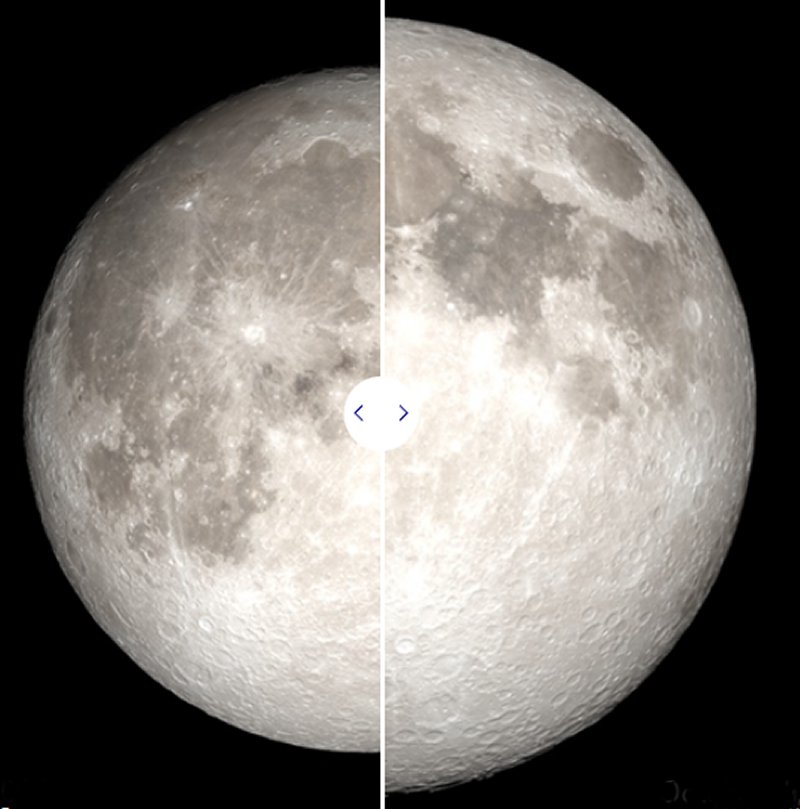
The Moon appears slightly larger when it is
at perigee and the difference is size between the two extremes is about
14%. If a Full Moon occurs at perigee, it is known as a Supermoon. So on
7th, we really have a Harvest Supermoon! |
| |
 |
| |
|
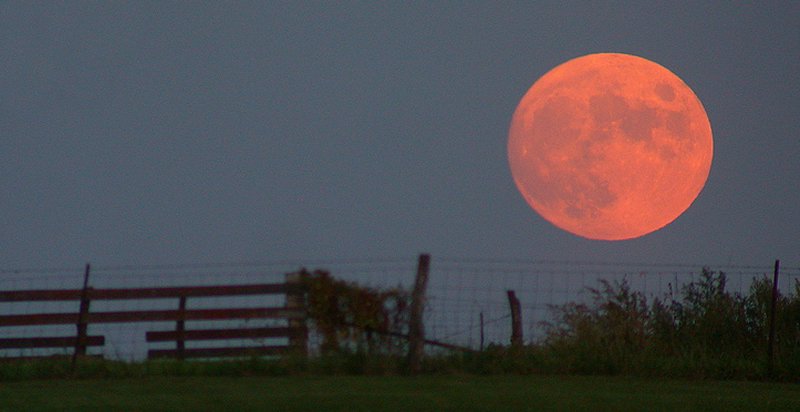
Because the Moon will be close to the horizon
when you view it, you may also witness that phenomenon known as "Moon
Illusion" where your eyes play a trick on you and make it appear
artificially large. |
| |
 |
|
Monday 29th September
to Sunday 5th October 2025 |
| |
|
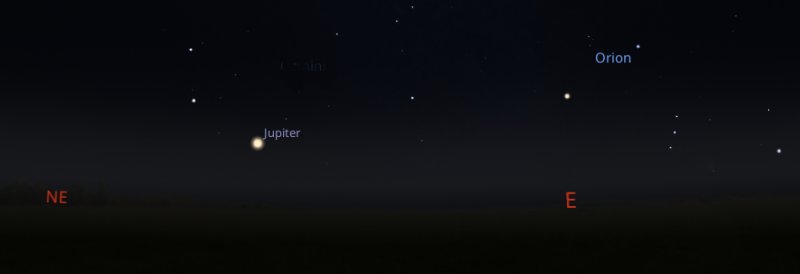
If you venture outside at 1am on Monday 29th
September and look towards the east north east, Jupiter will have just risen
above the horizon. To the right of the gas giant, you should also be able
to make out the constellation of Orion more towards the east and again,
close to the horizon. |
| |
 |
| |
|
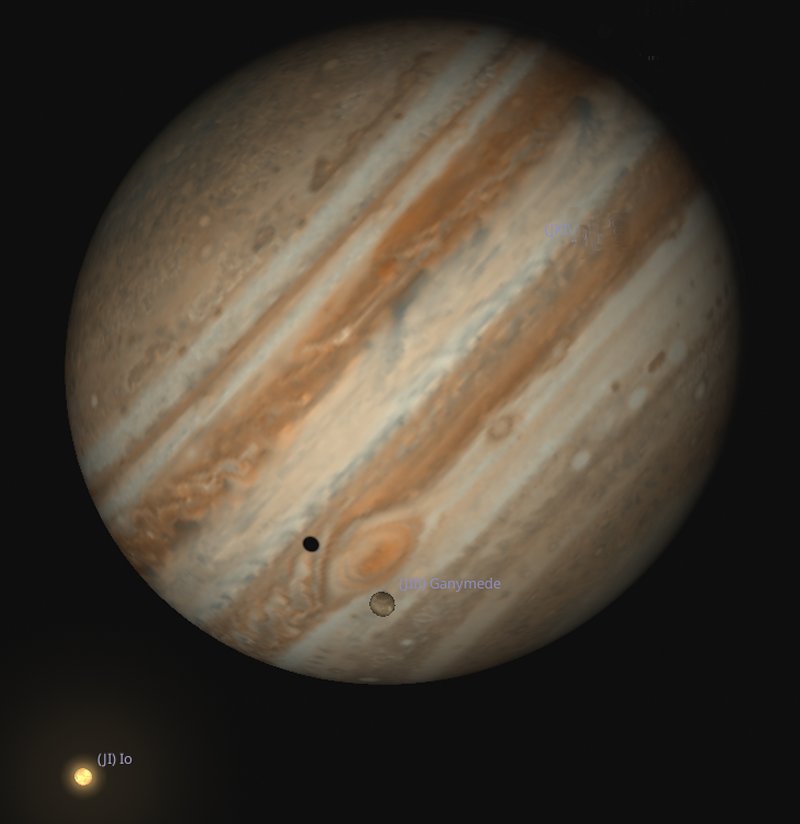
Why 1am specifically? Well if you aim your
telescope towards Jupiter at that time, it should be possible to witness the
shadow of the planet's moon Io cast onto its surface, while at the same
time, another of Jupiter's moons, Ganymede, is physically passing in front
of the planet. At 1am, Ganymede and the shadow of Io will appear to be
either side of Jupiter's Great Red Spot. |
| |
 |
| |
|
The Great Red Spot is a giant storm in
Jupiter's upper atmosphere that has been blowing for hundreds of years. It
measures about 10,000 miles across, so is about the size of the whole Earth
and has wind speeds of over 250 miles per hour! It keeps going because
Jupiter has no planetary surface that would cause friction to slow it down.
Often, when you look at Jupiter through a telescope, you don't see the Great
Red Spot at all. This is because it only takes ten hours for the storm to
rotate completely around the planet, so it's often round the other side! |
| |
 |
| |
|
Size comparison image courtesy of
NASA |
| |
|
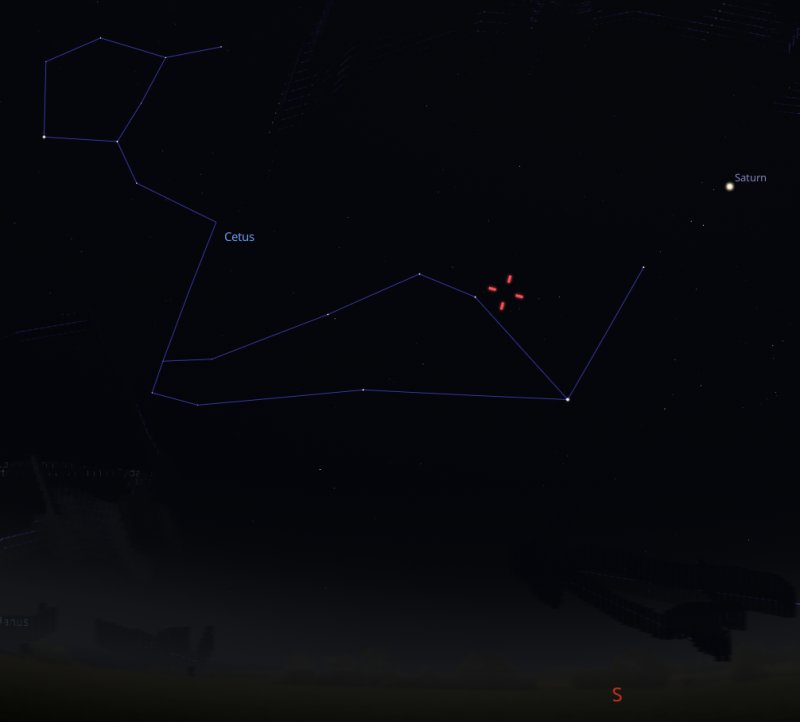
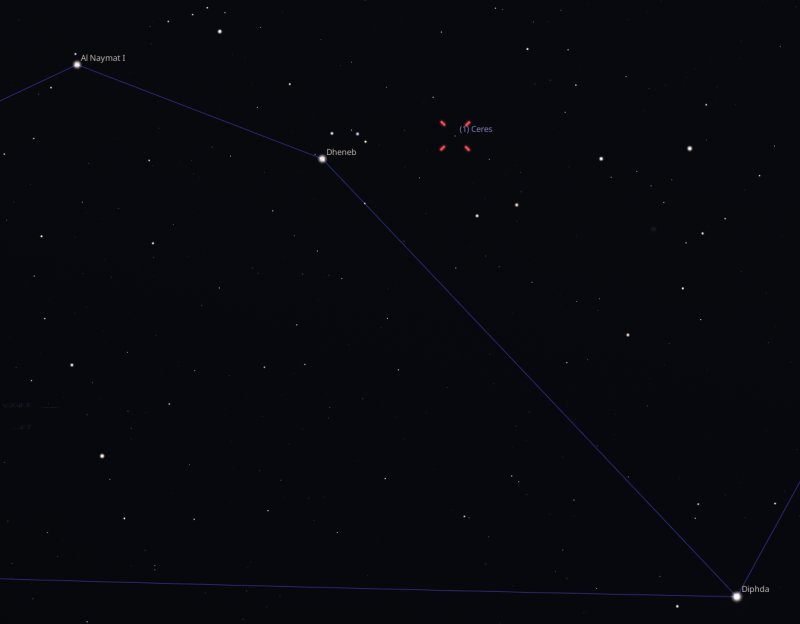
Look towards the south around 1am on 2nd
October and Saturn will be an easy target to spot. To the left of Saturn
will be the large constellation of Cetus and with your telescope, you could
try to find the dwarf planet Ceres that lives in the Asteroid Belt - it will
be just to the right of Cetus with a magnitude of around +7.6 |
| |
 |
| |
 |
|
Monday 22nd to
Sunday 28th September 2025 |
| |
|
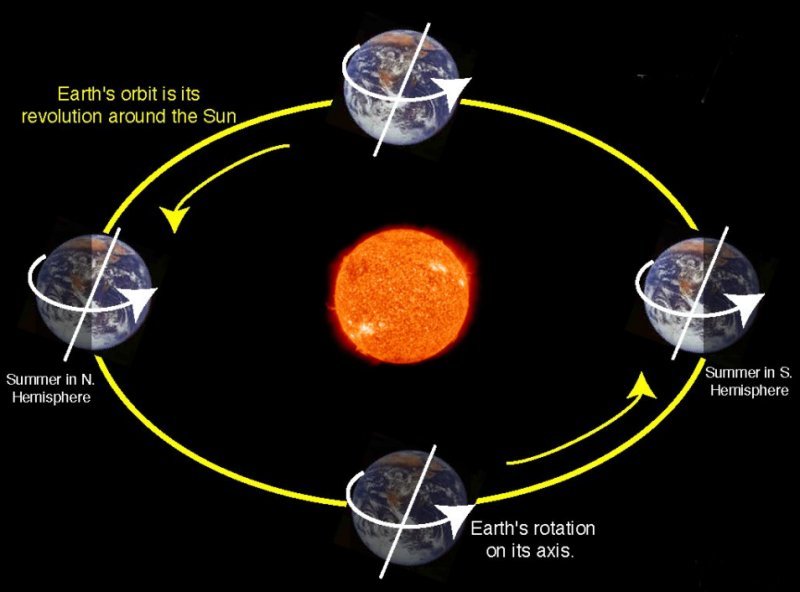
Monday 22nd is the autumn equinox. This
translates to "equal night and day" and is the point in our orbit around the
Sun where the Earth's 23.5 degree tilt is sideways on to the Sun. The same
happens again six months later of course, when we have the spring equinox.
In between these times, the northern hemisphere is either pointing away from
the Sun or towards it and we have winter or summer. |
| |
 |
| |
|
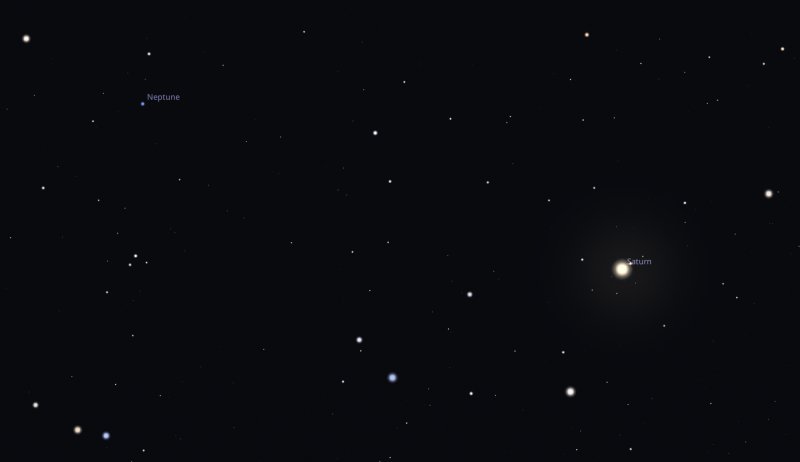
Last week, I mentioned about Saturn being
viewable throughout the night as it appears to travel from east to west
horizons. This week, if you dig out your telescope to have a better look at
the gas giant, it should also be possible to spot Neptune just above and to
the left of Saturn. |
| |
|
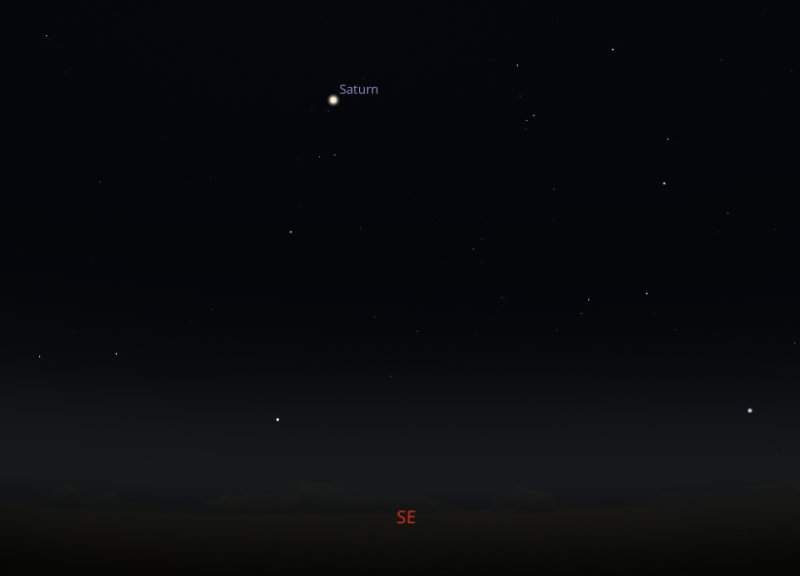
Pop outside any evening next week, around
10pm - Saturn will be located towards the south east and easy to spot,
shining at a magnitude of around +0.6 while Neptune will be a much harder
target at a magnitude of only +7.7 making it invisible to the naked eye. |
| |
 |
| |
 |
| |
|
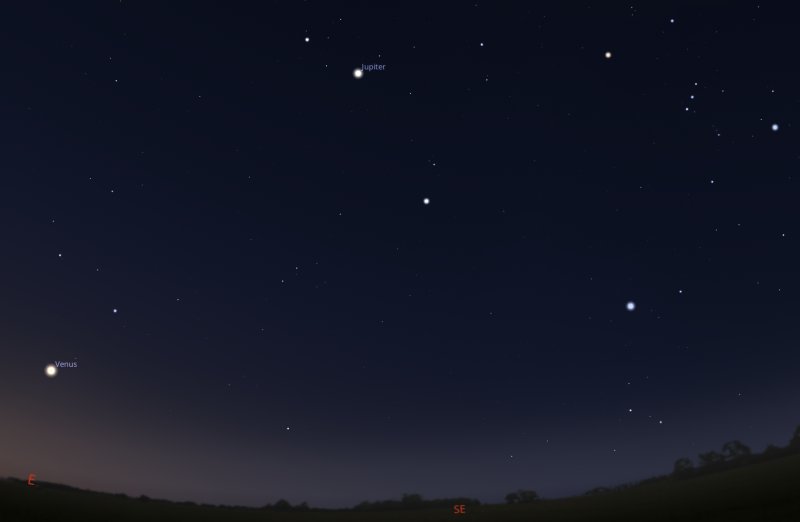
Venture back outside at 6am on Saturday 27th
and Jupiter will be quite high in the sky towards the south east, with a
very bright planet Venus rising above the horizon in the east. |
| |
 |
| |
|
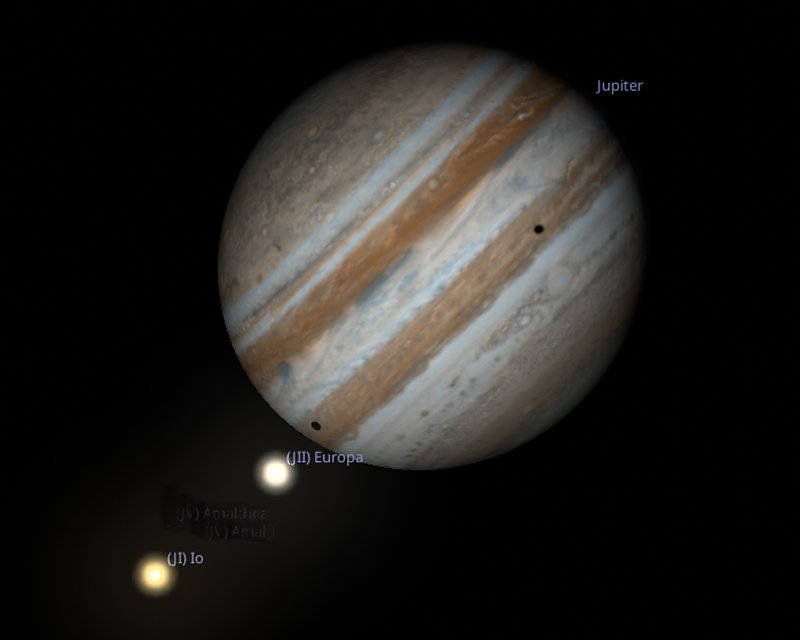
Why have I chosen 6am on the Saturday
specifically? Well if you aim your telescope towards Jupiter then, it will
be possible to see the shadow cast by two of Jupiter's moons, Io and Europa,
at the same time. How cool is that! |
| |
 |
| |
|
Please remember to pack your telescope away
before the Sun rises though, as catching an accidental glimpse of that in
your eyepiece would most definitely NOT be cool! |
|
Monday 15th to
Sunday 21st September 2025 |
| |
|
We always associate astronomy with the night
sky, but it is possible to observe some brighter objects during the day,
with our Moon being the most obvious target. |
| |
|
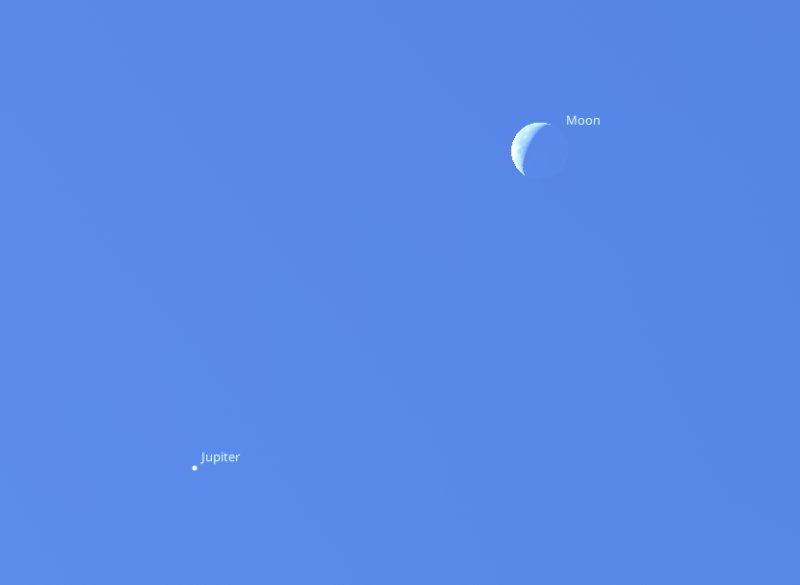
Look towards the south west around 11am on
Tuesday morning 16th and try to spot a 28%-lit waning crescent Moon with the
naked eye. It will be quite high in the sky - about 55 degrees above the
horizon. If you have brought your telescope out, just below and to the left
of the Moon, Jupiter will be shining at a magnitude of -1.9
|
| |
 |
| |
|
I will repeat my usual warning though, that
the Sun will be shining very brightly at a magnitude of around -26.0 a
little further south and you must never accidentally catch a glimpse of it
in your telescope's eyepiece, as it would result in instant and permanent
blindness! |
| |
|
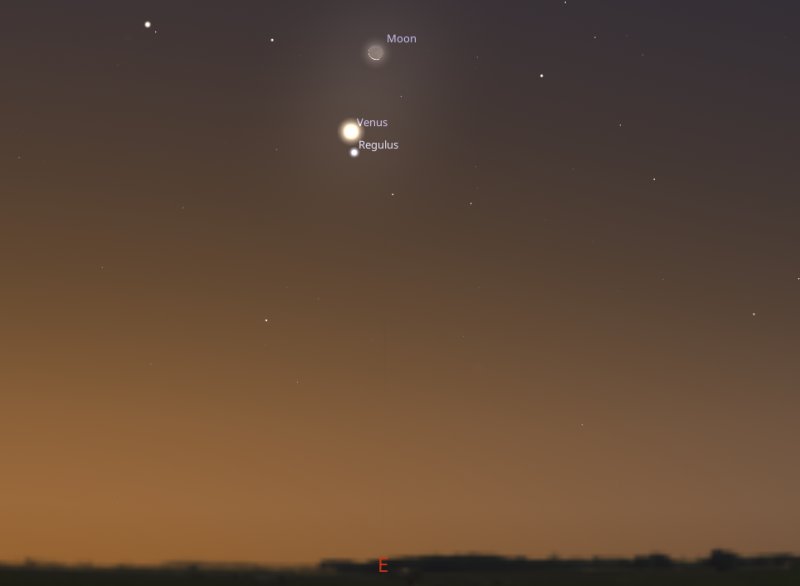
Moving on to the morning of Friday 19th, look
towards the east at 6am to see a 6%-lit crescent Moon. Just below the Moon,
Venus will be easy to spot at a magnitude of -3.8 and immediately below
Venus, you should be able to see the magnitude +1.0 bright star Regulus. |
| |
 |
| |
|
Don't even bother risking your telescope for
this one, as the Sun will be just about to rise above the horizon in the
same place! |
| |
|
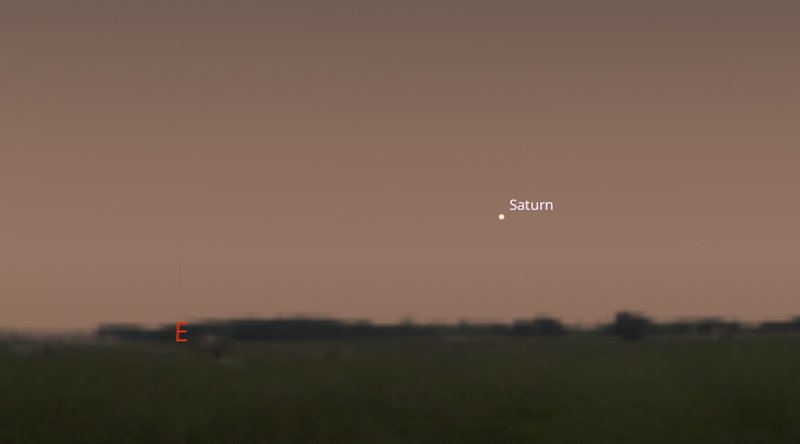
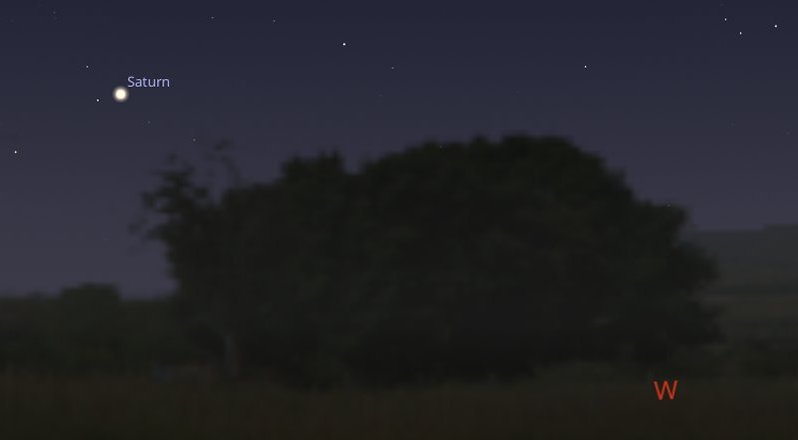
Finally, towards the end of the week, Saturn
reaches opposition and it will actually be viewable the whole night, from
dusk to dawn, as it appears to travel between east and west horizons. |
| |
 |
| |
 |
|
Monday 8th to
Sunday 14th September 2025 |
| |
|
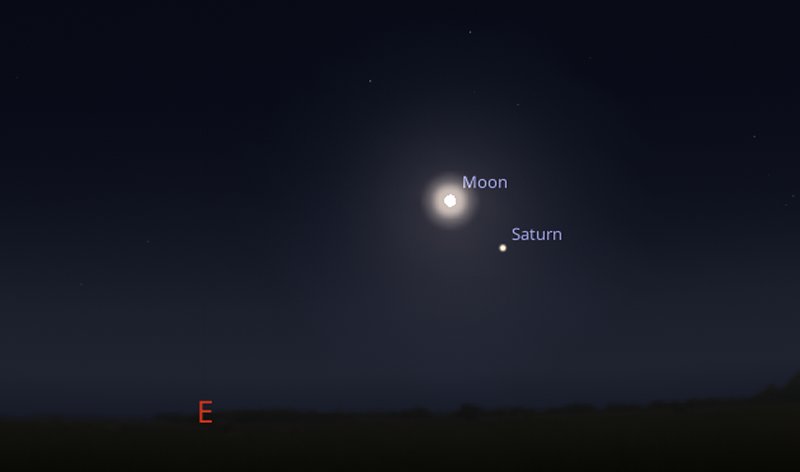
We will have had a Full Moon on Sunday 7th,
so if you pop outside around 9pm on Monday 8th and look towards the east,
you will see a 98%-lit waning gibbous Moon rising above the horizon,
extremely close to Saturn. The gas giant will be just below and to the
right of the Moon. |
| |
 |
| |
|
I wouldn't bother bringing your telescope
outside as, being so close to a Full Moon, the light pollution from it makes
for poor viewing of those elusive faint deep sky objects. |
| |
|
One deep sky object that is always easy to
spot though is the Pleiades open cluster of stars, also known as M45 in the
Charles Messier catalogue and often called the "Seven Sisters" because of
the seven prominent stars that can be seen with the naked eye. |
| |
|
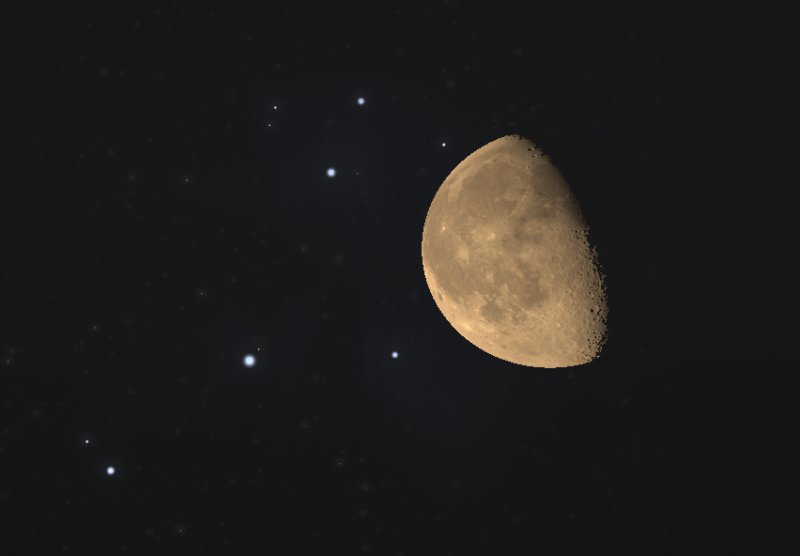
If you look towards the east north east at
9pm on Friday 12th, a slightly gibbous Moon will have just risen above the
horizon and as it does so, the Moon occults (or appears to pass in front of)
the Pleiades. |
| |
 |
| |
|
The Pleiades is the closest Messier
object to us and is only 440 light years away. The bright blue stars
that you see are relatively young and it is estimated that the cluster
formed about 100 million years ago. If you are looking at them,
remember that you will be seeing the stars how they were 440 years ago, as
the light from them has taken that long to reach us, travelling at the speed
of light, which is 186,000 miles per second! |
| |
|
The stars are gradually drifting apart and in
around 250 million years, the group will no longer be classed as a cluster,
rather individual stars. |
|
Monday 1st to
Sunday 7th September 2025 |
| |
|
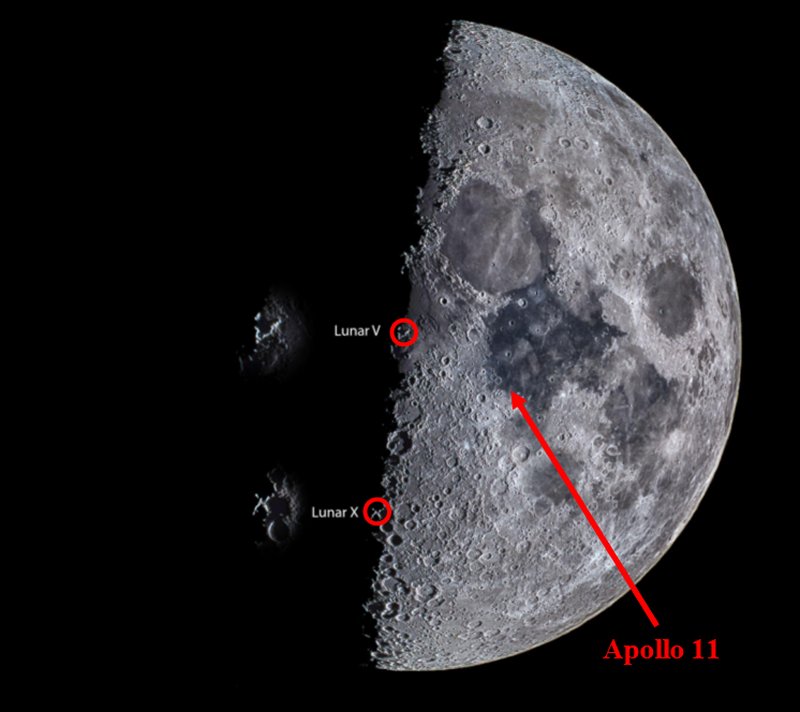
The evening of Tuesday 2nd is the optimum
time to spot the clair-obscur visual effects known as the "Lunar X and V",
where sunlight falling on the Moon's surface reflects off particular
features and creates recognisable shapes. |
| |
|
Look towards the south south west around 11pm
and the Moon will be about to set below the horizon. You will need
your telescope to be able to spot the "X" and "V" shapes on the terminator
between light and dark on the lunar surface. |
| |
 |
| |
|
A little to the right of the "V" you can find
the dark area known as the "Sea of Tranquility" where Apollo 11 landed back
in 1969. Of course there isn't really any water on the Moon, but early
astronomers thought that the large dark, flat areas must be oceans and the
names stuck. |
| |
 |
| |
|
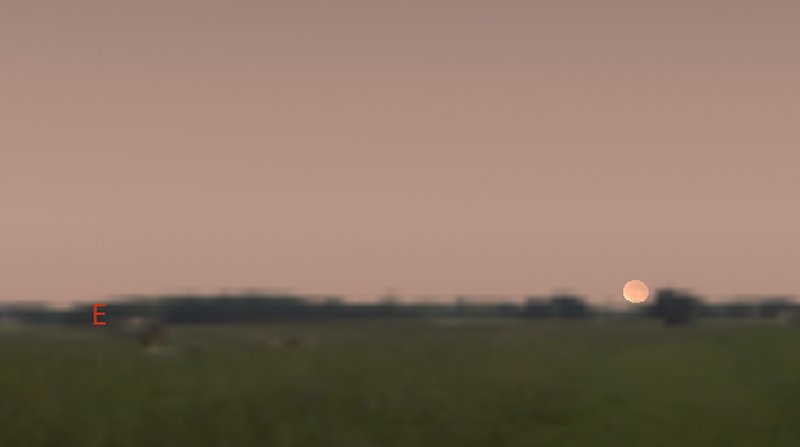
Sticking with our neighbour in the Solar
System, but moving on to the evening of Sunday 7th, we have a lunar eclipse.
As the Moon rises above the horizon at sunset, it is fully immersed in the
Earth's shadow. |
| |
|
Look towards the east at 7.45pm to catch the
Moon popping its head above the horizon and at that time, it will appear
quite dark because it is totally eclipsed - this is called "totality". |
| |
 |
| |
|
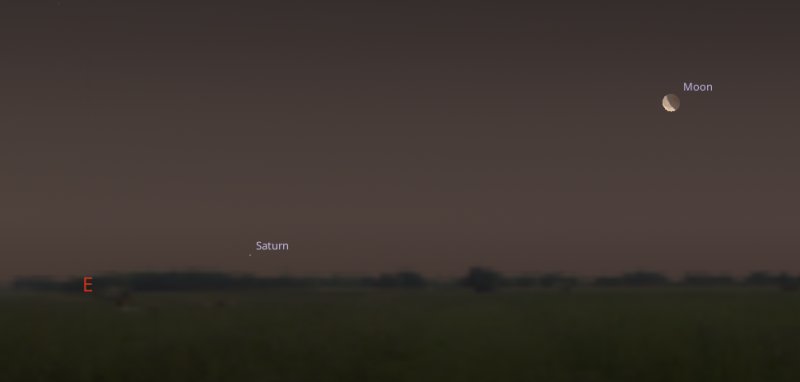
Gradually, over the following hour, as the
Moon comes out of totality and rises in the sky, you will see more and more
of its surface illuminated. If you are still watching it at 8.15pm,
you will also be able to notice Saturn rising above the horizon in the same
place. |
| |
 |